

By a Certified Piping Engineer | Based on ASME B36.10M & B36.19M | Last Updated: April 2026
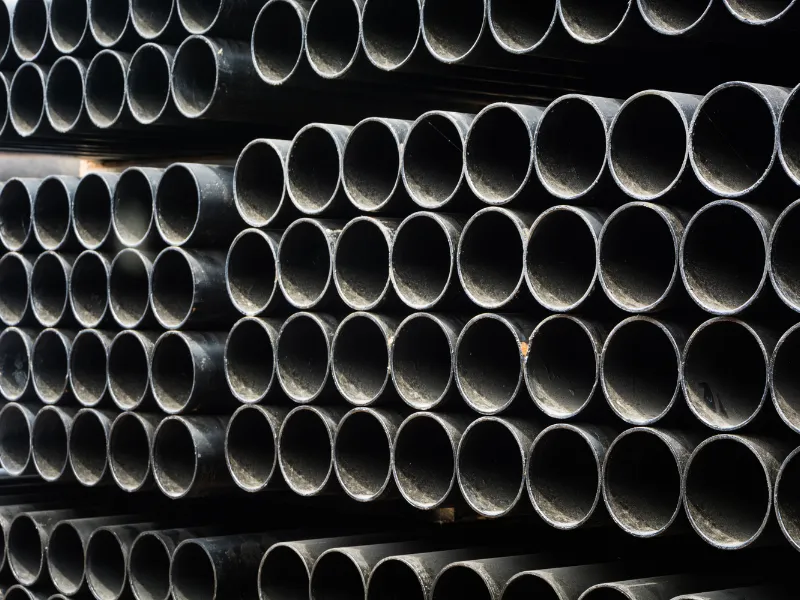
A steel pipe size chart is the single most important reference document in industrial piping it tells you the outside diameter, wall thickness, inside diameter, and weight of any pipe by cross-referencing its nominal pipe size (NPS) and schedule number. Engineers, procurement teams, and fabricators rely on this data daily to select the right pipe for pressure, temperature, and flow requirements. Get the dimensions wrong, and the consequences range from failed fittings to full system failure.
This guide gives you a complete, ASME-verified steel pipe size chart along with clear explanations of how to read it, what NPS and schedule actually mean, and how to select the correct schedule for any application. For the official dimension tables this guide is based on, you can visit here; Engineering Toolbox’s ASME B36.10/19 pipe dimension reference is one of the most authoritative free resources available online.
Table of Contents
Steel Pipe Size Chart — Full NPS Dimension Table
The table below is based on ASME B36.10M for carbon steel pipe and covers the most commonly used NPS sizes from ½ inch through 12 inch. Outside diameter (OD) is fixed across schedules. Wall thickness (WT) and inside diameter (ID) change with schedule.
| NPS | DN | OD (mm) | Sch 40 WT (mm) | Sch 40 ID (mm) | Sch 80 WT (mm) | Sch 80 ID (mm) |
| 1/2 | 15 | 21.34 | 2.77 | 15.80 | 3.73 | 13.88 |
| 3/4 | 20 | 26.67 | 2.87 | 20.93 | 3.91 | 18.85 |
| 1 | 25 | 33.40 | 3.38 | 26.64 | 4.55 | 24.30 |
| 1½ | 40 | 48.26 | 3.68 | 40.90 | 5.08 | 38.10 |
| 2 | 50 | 60.33 | 3.91 | 52.51 | 5.54 | 49.25 |
| 3 | 80 | 88.90 | 5.49 | 77.92 | 7.62 | 73.66 |
| 4 | 100 | 114.30 | 6.02 | 102.26 | 8.56 | 97.18 |
| 6 | 150 | 168.28 | 7.11 | 154.06 | 10.97 | 146.34 |
| 8 | 200 | 219.08 | 8.18 | 202.72 | 12.70 | 193.68 |
| 10 | 250 | 273.05 | 9.27 | 254.51 | 12.70 | 247.65 |
| 12 | 300 | 323.85 | 9.53 | 304.79 | 12.70 | 298.45 |
Note: All values are in millimetres (mm) and based on ASME B36.10M. ID is calculated as OD − (2 × WT). Tolerances per ASME standard are ±0.5mm on OD for sizes up to NPS 1½.
What Nominal Pipe Size (NPS) Actually Means
Nominal pipe size, written as NPS, is a North American dimensionless number used to identify pipe diameter. The word nominal is critical here — it does not mean actual. For all pipes from NPS ½ through NPS 12, the NPS number is not equal to the pipe’s true outside diameter.
Why NPS Does Not Match the Real Diameter
This mismatch exists because the NPS system was originally based on inside diameter under the older Iron Pipe Size (IPS) standard, established in 1927. As pipe manufacturing evolved and wall thicknesses changed, the NPS labels stayed fixed while actual ODs shifted. For example, an NPS 2 steel pipe has an outside diameter of 60.33 mm — not 50.8 mm (which is 2 inches). This confuses newcomers consistently.
For NPS 14 and above, the rule flips: the NPS number does equal the OD exactly. An NPS 14 pipe has an outside diameter of exactly 14 inches (355.60 mm).
NPS to DN Conversion
The metric equivalent of NPS is DN (diamètre nominal), used across European and ISO standards. The conversion is simple: multiply NPS by 25. So NPS 2 becomes DN 50, NPS 4 becomes DN 100, and NPS 8 becomes DN 200. When sourcing pipe internationally, always confirm whether the supplier is quoting NPS or DN, as suppliers in different regions use different labelling conventions.
How Pipe Schedule Numbers Work
Pipe schedule is the system used to define wall thickness. It is represented by a number — Schedule 5, 10, 20, 30, 40, 60, 80, 100, 120, 140, or 160. The higher the schedule number, the thicker the pipe wall. A thicker wall means higher pressure capacity, but it also means reduced internal diameter and added weight.
The Engineering Formula Behind Schedule Numbers
Schedule numbers are not arbitrary. They are derived from an ASME formula: Schedule = (P ÷ S) × 1000, where P is the internal design pressure in MPa and S is the allowable stress of the pipe material at operating temperature in MPa. In practice, engineers use pre-calculated steel pipe size charts rather than running this formula manually — but knowing it exists explains why a higher-pressure system always requires a higher schedule.
For any given NPS, the outside diameter is identical across all schedule numbers. Only the wall thickness changes. This is by design — it allows fittings, flanges, and supports to remain dimensionally compatible regardless of which schedule of pipe is installed.
Schedule 40 vs Schedule 80: Key Differences
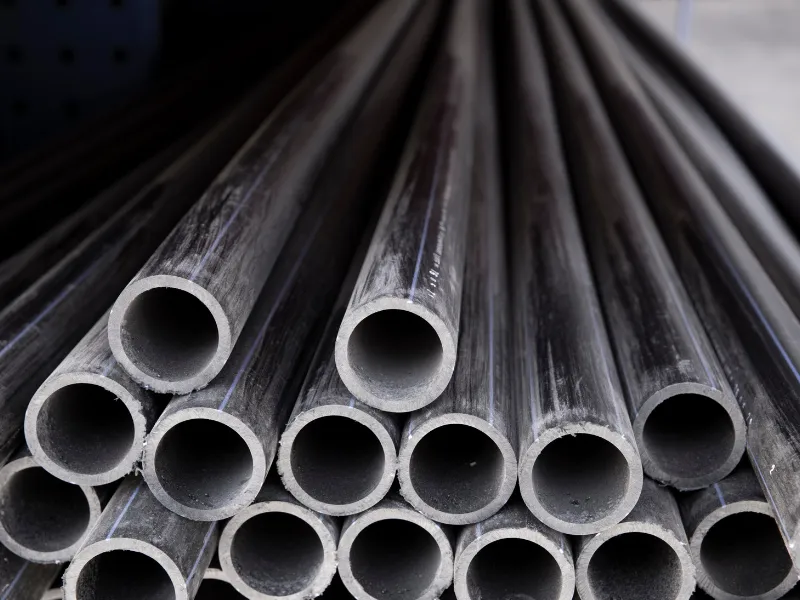
Schedule 40 and Schedule 80 are the two most widely specified pipe schedules across plumbing, oil and gas, industrial processing, and construction. Understanding the differences between them is essential for any engineer or buyer working from a steel pipe size chart.
Wall Thickness, Pressure, Weight, and Cost
For the same NPS, Schedule 80 has a thicker wall than Schedule 40. This means Schedule 80 can handle higher operating pressures — but it weighs more per metre and costs more per unit length. Here is a direct comparison at NPS 2 (DN 50), OD 60.33 mm:
• Schedule 40: Wall thickness 3.91 mm → ID 52.51 mm → weight approx. 5.44 kg/m
• Schedule 80: Wall thickness 5.54 mm → ID 49.25 mm → weight approx. 7.48 kg/m
The 37% increase in wall thickness reduces the ID by only 3.26 mm, but increases pipe weight by roughly 37% and material cost proportionally. For flow-sensitive applications, the reduced bore of Schedule 80 may require a larger NPS to maintain the same flow rate, adding cost in another direction.
Both schedules share the same outside diameter at NPS 2 (60.33 mm), which means flanges, clamps, and many fittings are physically interchangeable between the two — but pressure ratings are not, so never substitute one for the other without verifying the system’s design pressure.
Weight Classes: STD, XS, and XXS Explained
Before schedule numbers became the standard designation, the industry used three weight classes: Standard (STD), Extra Strong (XS), and Double Extra Strong (XXS). These still appear in supplier catalogs and older project specifications, so knowing their schedule equivalents matters.
• STD (Standard) is equivalent to Schedule 40 for NPS ½ through NPS 10. Above NPS 10, STD wall thickness is fixed at 9.53 mm.
• XS (Extra Strong) is equivalent to Schedule 80 for NPS ½ through NPS 8. Above NPS 8, XS wall thickness is fixed at 12.70 mm.
• XXS (Double Extra Strong) has no single schedule equivalent. For NPS sizes up to NPS 6, XXS is heavier than Schedule 160. For larger sizes, Schedule 160 can actually exceed XXS in wall thickness — which catches many engineers off guard.
When a steel pipe size chart lists both weight class and schedule number in separate columns, both columns are expressing wall thickness information through different labelling systems. Always use the actual wall thickness value in mm to compare them reliably.
Learn more about copper pipe specifications and today’s copper scrap value in order to have relevant information of how and what price to obtain these metals.
How to Read a Steel Pipe Size Chart Step by Step
Reading a steel pipe size chart correctly takes less than a minute once you know what to look for. Follow these steps:
Step 1: Identify your NPS
Find your required nominal pipe size in the left-hand column of the chart. Remember that NPS is not the actual OD — it is only a label.
Step 2: Read the outside diameter
Move to the OD column. This value is fixed — it will be the same regardless of which schedule you select. For NPS 4, the OD is always 114.30 mm.
Step 3: Select your schedule and read wall thickness
Locate the column for your required schedule. Read the wall thickness (WT) value from the intersection of your NPS row and schedule column.
Step 4: Calculate inside diameter
If ID is not listed directly, calculate it: ID = OD − (2 × WT). For NPS 4 Schedule 40: ID = 114.30 − (2 × 6.02) = 102.26 mm. This ID value determines the flow capacity of the pipe.
Step 5: Confirm the governing standard
Check whether your chart is based on ASME B36.10M (carbon and alloy steel) or ASME B36.19M (stainless steel). The values differ at certain NPS/schedule combinations — particularly at NPS 10 and 12 in Schedule 80S for stainless steel.
Steel, Stainless Steel, and PVC Pipe: Standards Comparison
Carbon and Alloy Steel Pipe — ASME B36.10M
ASME B36.10M covers seamless and welded carbon steel and alloy steel pipe. It is the most commonly referenced standard in industrial piping. Material grades sourced to this standard include ASTM A106 (for high-temperature service), API 5L (for line pipe in oil and gas), and ASTM A53 (general purpose).
Stainless Steel Pipe — ASME B36.19M
Stainless steel pipe follows ASME B36.19M and uses schedule designations with an S suffix: 5S, 10S, 40S, and 80S. Most dimensions overlap with B36.10M, but the suffix distinguishes stainless schedules where the values diverge. At NPS 10 and NPS 12 in Schedule 80S, the stainless steel wall thickness differs from its carbon steel counterpart — a critical distinction when specifying corrosion-resistant pipe for chemical or pharmaceutical service.
PVC Pipe — NPS System with Pressure Ratings
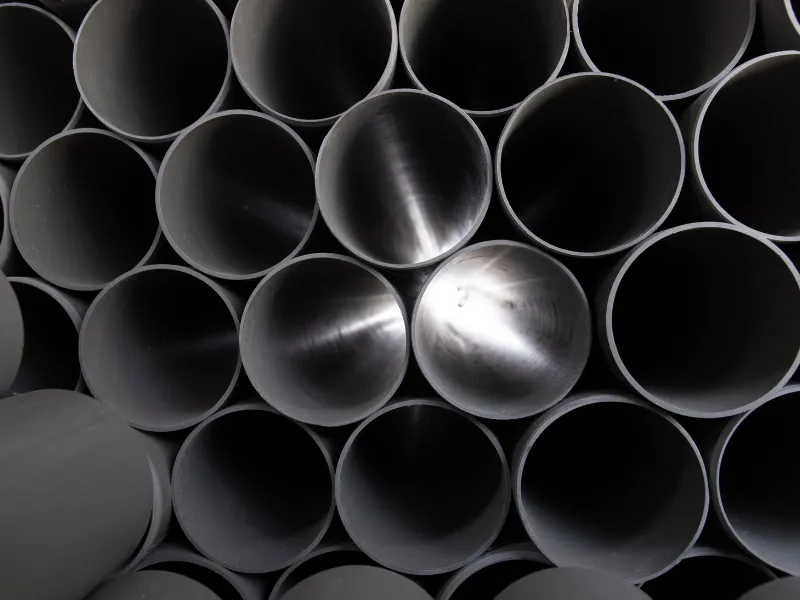
PVC pipe uses the same NPS system and the same Schedule 40 and Schedule 80 OD values as steel pipe. A key difference is that PVC pipe size charts include pressure ratings in PSI or bar alongside physical dimensions, because PVC pressure capacity degrades with temperature in a way that steel does not. Always match the NPS of the PVC pipe to the NPS of the fitting — never mix schedules at threaded connections without verifying thread compatibility.
How to Choose the Right Schedule from a Steel Pipe Size Chart
Selecting the correct schedule is an engineering decision, not a guess. These are the factors that drive it:
• Design pressure: This is the starting point. Calculate the minimum required wall thickness using Barlow’s formula: P = (2 × S × t) ÷ D, where S is the allowable material stress, t is wall thickness, and D is outside diameter. The schedule you select must provide at least this wall thickness.
• Operating temperature: Allowable stress decreases as temperature rises. A pipe rated at 140 MPa allowable stress at 20°C may only sustain 100 MPa at 350°C, requiring a heavier schedule to compensate.
• Fluid type and corrosion allowance: Corrosive fluids require additional wall thickness beyond the pressure minimum. Standard practice adds a corrosion allowance of 1.5 mm to 3 mm to the calculated minimum, depending on the service.
• Flow requirements: A higher schedule reduces ID and increases fluid velocity for the same flow rate. If velocity exceeds erosion limits, you may need a larger NPS at a lower schedule rather than a smaller NPS at a higher schedule.
• Cost and weight: Schedule 80 costs approximately 30–40% more than Schedule 40 in the same NPS and material. On large-volume orders, over-specifying the schedule adds significant cost and shipping weight without improving safety margin.
The most common mistake is specifying Schedule 80 for low-pressure applications simply because it feels “safer.”
Frequently Asked Questions
These are the most common questions engineers and buyers ask when working with a steel pipe size chart.
What is a steel pipe size chart used for?
A steel pipe size chart gives the outside diameter, wall thickness, and inside diameter for any combination of NPS and schedule. Engineers use it to select pipe that meets system pressure, temperature, and flow requirements. Procurement teams use it to specify pipe correctly on purchase orders.
What is the difference between NPS and DN?
NPS is the North American inch-based nominal pipe size designation. DN is the metric equivalent used in European and ISO standards. To convert NPS to DN, multiply by 25. NPS 2 = DN 50, NPS 6 = DN 150, NPS 12 = DN 300.
Does changing the schedule change the outside diameter?
No. The outside diameter is fixed for any given NPS, regardless of schedule. Only the wall thickness and inside diameter change. This is why fittings and flanges are dimensionally compatible across schedules of the same NPS.
Is Schedule 40 pipe the same as Standard Weight (STD)?
For NPS ½ through NPS 10, yes — Schedule 40 and STD have the same wall thickness. Above NPS 10, STD holds at 9.53 mm wall thickness while Schedule 40 continues to increase. Always check the actual dimension values on the chart rather than assuming equivalence above NPS 10.
What schedule is used for standard water supply pipe?
Schedule 40 steel pipe is the standard specification for most domestic and commercial water supply systems operating at normal pressures (below 10 bar). Schedule 80 is used where higher pressure ratings are required, such as in fire suppression or industrial water systems.
How do I calculate inside diameter from a pipe size chart?
Use the formula: ID = OD − (2 × Wall Thickness). For NPS 6 Schedule 40: ID = 168.28 − (2 × 7.11) = 154.06 mm. This inside diameter directly determines the cross-sectional flow area and, by extension, the flow velocity and pressure drop across the pipe.
What is the difference between ASME B36.10M and B36.19M?
ASME B36.10M covers dimensions for carbon steel and alloy steel pipe. ASME B36.19M covers stainless steel pipe. Most dimensions are identical, but stainless steel schedules carry an S suffix (5S, 10S, 40S, 80S) and diverge from B36.10M at NPS 10 and NPS 12 in Schedule 80S. Always confirm which standard applies to your material before using a pipe size chart.
Can Schedule 40 and Schedule 80 fittings be used together?
Physically, yes — they share the same OD and thread dimensions for the same NPS. But the pressure rating of a joined assembly is limited by the weaker component. If a Schedule 40 fitting is joined to Schedule 80 pipe, the system’s maximum allowable pressure at that joint is the Schedule 40 fitting’s rating, not the Schedule 80 pipe’s rating.
About This Guide
This steel pipe size chart and reference guide is based on ASME B36.10M and ASME B36.19M dimensional standards. Dimension values have been cross-referenced against published ASME tables. This guide is intended for reference and selection support — all final pipe specifications for pressure systems should be verified by a qualified piping engineer against the applicable design code (ASME B31.1, B31.3, or B31.4 as applicable).