

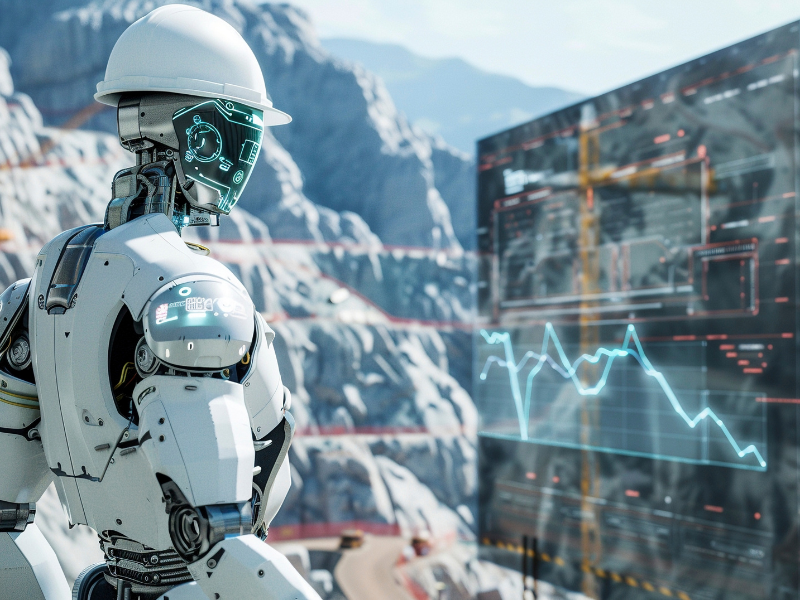
The AI sector has dropped nearly 9% in early 2026. Here is a stock-by-stock breakdown of where the real opportunity sits and where valuations still demand patience.
−9%
AI ETF drop
early 2026
$185B
Alphabet cloud
infra spend 2026
70%
Palantir YoY
revenue growth
Why AI stocks have pulled back in 2026
The Global X Artificial Intelligence and Technology ETF a broad proxy for the sector shed close to 9% of its value in the opening months of 2026. For investors who had watched AI stocks buying case race higher through 2024 and 2025, the correction felt abrupt. But the causes are identifiable, and none of them signal that the long-term AI story has broken down.
Three overlapping pressures drove the sell-off. First, many AI stocks reached valuations that were simply too far ahead of their underlying businesses. Second, investors became increasingly worried about the scale of capital expenditure required to build out AI infrastructure hundreds of billions of dollars flowing into GPUs, servers, land, construction, and cooling systems. Third, broader macroeconomic anxiety around interest rate uncertainty and geopolitical tensions gave investors a reason to rotate out of high-multiple growth names.
Key insight
The 2026 correction is a valuation reset, not a demand collapse. Companies writing the biggest infrastructure checks Alphabet, Microsoft, Amazon are simultaneously reporting some of the strongest revenue growth in their histories.
The infrastructure cost debate: Spending or Signal?
The core anxiety gripping the market centres on AI infrastructure costs. Building the compute capacity needed to train and serve large AI models requires staggering capital commitments. Alphabet announced plans to spend $185 billion on cloud infrastructure in 2026, and simultaneously raised $32 billion in a bond sale to help fund the build-out. Markets initially punished the announcement Alphabet’s stock dropped nearly 10% in March but the reaction appears overdone.
Spending at this scale is a confidence signal, not a distress signal. Companies do not commit $185 billion to infrastructure unless they see sustained, growing demand on the other side. The hyperscalers writing the largest checks are also generating the largest returns from AI-powered services. Click here and see the investors who focus only on the spending headline are missing the revenue story behind it.
Stock-by-stock breakdown: what to buy, what to wait on
| Company | Ticker | Key Metric | Valuation Signal | Verdict |
| Nvidia | NVDA | Rubin platform H2 2026; demand > supply | Premium but justified by moat | Buy on dips |
| Alphabet | GOOGL | Below Nasdaq-100 avg P/E; $185B capex | Reasonable vs peers | Buy |
| TSMC | TSM | ~70% global processor share; +30% sales est. 2026 | Fair; infrastructure-linked growth | Buy |
| Microsoft | MSFT | 345M paid subscribers; Azure + Copilot growth | Elevated but durable revenue base | Hold / accumulate |
| Palantir | PLTR | 70% YoY revenue growth; $4.26B contract value | 120x sales, 254x fwd earnings — extreme | Wait for pullback |
Nvidia: still the dominant infrastructure pick
Nvidia’s position in the AI supply chain remains unmatched. Its GPUs are the primary compute substrate for training and serving large AI models, and demand continues to outstrip available supply. The company is preparing to launch its next-generation Rubin platform in the second half of 2026, which should sustain the hardware upgrade cycle through the next 12 to 18 months.
Beyond chips, Nvidia is expanding into autonomous vehicles, robotics, and physical AI applications growth layers that could matter substantially over a five-to-ten-year horizon. Corrections in Nvidia’s stock have historically been buying opportunities for investors with patience. The current dip is no different in kind, though entry point discipline still matters.
Alphabet: deep AI exposure at a reasonable price
Alphabet has been building AI capabilities for more than a decade, and today AI touches nearly every part of its business. Gemini models power Google Search and YouTube recommendations. Google Cloud is growing rapidly as enterprises adopt AI workloads. Google Workspace is embedding AI assistance across productivity tools. Advertising revenue has continued to grow despite fears that generative AI would disrupt the Search business model.
Critically, Alphabet’s forward earnings multiple currently sits below the Nasdaq-100 average, making it one of the few mega-cap AI plays that offers broad exposure without requiring investors to pay a significant valuation premium. The March sell-off following the capex announcement created a more attractive entry point.

Taiwan Semiconductor (TSMC): the pick-and-shovel play
For investors who want AI exposure with lower single-company risk, TSMC offers a compelling infrastructure angle. The company manufactures approximately 70% of the world’s advanced processors. Whenever a leading chip designer like Nvidia, AMD, or Apple needs chips fabricated, TSMC is almost certainly involved.
Management has guided for approximately 30% revenue growth in 2026, driven directly by AI chip demand. That kind of demand-driven growth, tied to the entire AI build-out rather than any single company’s fortunes, offers a meaningfully different risk profile than buying a single chip designer.
Microsoft: durable revenue base, heavy capex burden
Microsoft’s partnership with OpenAI has made it one of the most visible AI players in the market, with AI embedded across Azure, Microsoft 365 Copilot, GitHub Copilot, and Edge. The company’s 345 million paid subscribers for its productivity software suite give it a revenue durability that most AI-focused companies simply cannot match.
The concern is capital expenditure. Microsoft is spending heavily to build out Azure AI capacity, and those costs are pressuring near-term margins. For long-term investors, the Azure AI growth trajectory justifies the investment. For investors who want immediate margin expansion, Microsoft may require patience.
Palantir: exceptional business, exceptional valuation risk
Palantir’s revenue jumped 70% year-over-year to $1.4 billion. The business is not the problem. The valuation is.
Palantir is one of the most discussed names in the AI investing conversation, and the business fundamentals justify the attention. The company reported $4.26 billion in total contract value in its most recent quarter, including 80 individual deals worth over $1 million each. Its Artificial Intelligence Platform has become genuinely hard to replace for the government and commercial clients that have adopted it.
The obstacle is the price. Palantir currently trades at approximately 120 times sales and 254 times forward earnings. To put that in context: during the peak of the dot-com bubble, even the most celebrated companies Cisco, Microsoft topped out at price-to-sales ratios of 30 to 50. Most high-growth SaaS businesses trade between 10 and 30 times sales under normal conditions. Palantir at 120 times sales prices in decades of flawless execution with zero margin for disappointment. Investors who want exposure should monitor the stock carefully and consider waiting for a meaningful pullback before initiating a position.
How to build a diversified AI portfolio
The most consistent lesson from investing through AI sector corrections is that companies with real, growing revenue tend to recover fully and then move higher. Long-term investors do not need to time the exact bottom. What they do need is a portfolio structure that survives volatility without forcing them to sell at the wrong moment.
A sensible approach spans the AI value chain rather than concentrating in one segment. Holding a semiconductor name like Nvidia alongside an infrastructure play like TSMC, a hyperscaler like Alphabet or Amazon, and a software company like Microsoft creates exposure to multiple parts of the AI economy. If one segment underperforms in a given quarter, others may hold steady or advance. AI-focused ETFs like the Global X AI & Technology ETF are a practical complement for investors who want sector exposure without the single-stock concentration risk.
The 30% rule offers a useful guardrail: limit total AI stock exposure to no more than 30% of a portfolio. AI remains a high-growth, high-volatility sector, and position sizing discipline is what separates investors who benefit from corrections from those who get hurt by them.

Frequently asked questions
Which AI stock is best to buy in the 2026 correction?
Nvidia remains the most cited top pick because of its dominant GPU position and the upcoming Rubin platform. Alphabet offers strong AI exposure at a more balanced valuation. Palantir is a high-quality business but its current valuation makes patience the wiser strategy.
Are AI stocks buying a good long-term investment despite the sell-off?
The 2026 correction appears to be a valuation reset rather than a fundamental breakdown. Underlying demand for AI infrastructure, cloud compute, and AI-powered software continues to grow. For investors with a five-to-ten-year horizon, dips in strong AI businesses have historically been opportunities rather than warnings.
Is Palantir stock overvalued in 2026?
At approximately 120 times sales and 254 times forward earnings, Palantir’s valuation is historically elevated even compared to dot-com-era peaks. The business itself is strong and growing, but the entry price carries significant risk. Most financial analysts suggest waiting for a meaningful correction in the stock before building a position.
What is the 30% rule in AI stocks buying?
The 30% rule is a portfolio guideline suggesting that AI stock exposure should not exceed 30% of total holdings. It helps investors participate in sector growth while limiting the damage a sharp sector correction can do to an overall portfolio.
How should I diversify across AI stocks?
A diversified AI portfolio typically spans semiconductors (Nvidia, AMD), hyperscalers (Alphabet, Amazon), enterprise software (Microsoft, Palantir), and infrastructure (TSMC). AI-focused ETFs are a practical option for broader exposure with lower single-stock risk.